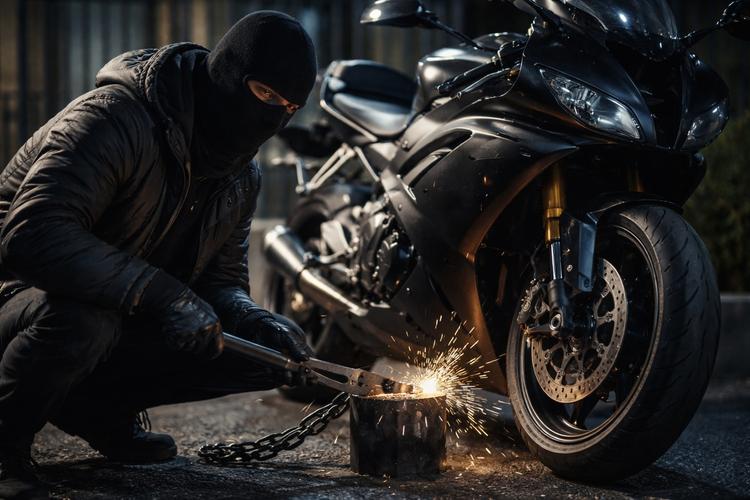
While it’s still morning and I’m in a good mood, I’m putting up a post for your consideration on the cornerstone topic of protecting your iron horse. Classifications, I love classifications. So let’s divide all types of protection into three categories: mechanical, electronic, and anthropogenic (human).
MECHANICAL PROTECTION
The whole point of mechanical protection boils down to one thing: physically preventing the motorcycle from being removed from a specific location. Notifying the owner or people nearby has a right to exist, but for this category it’s more of an add-on.
CABLE
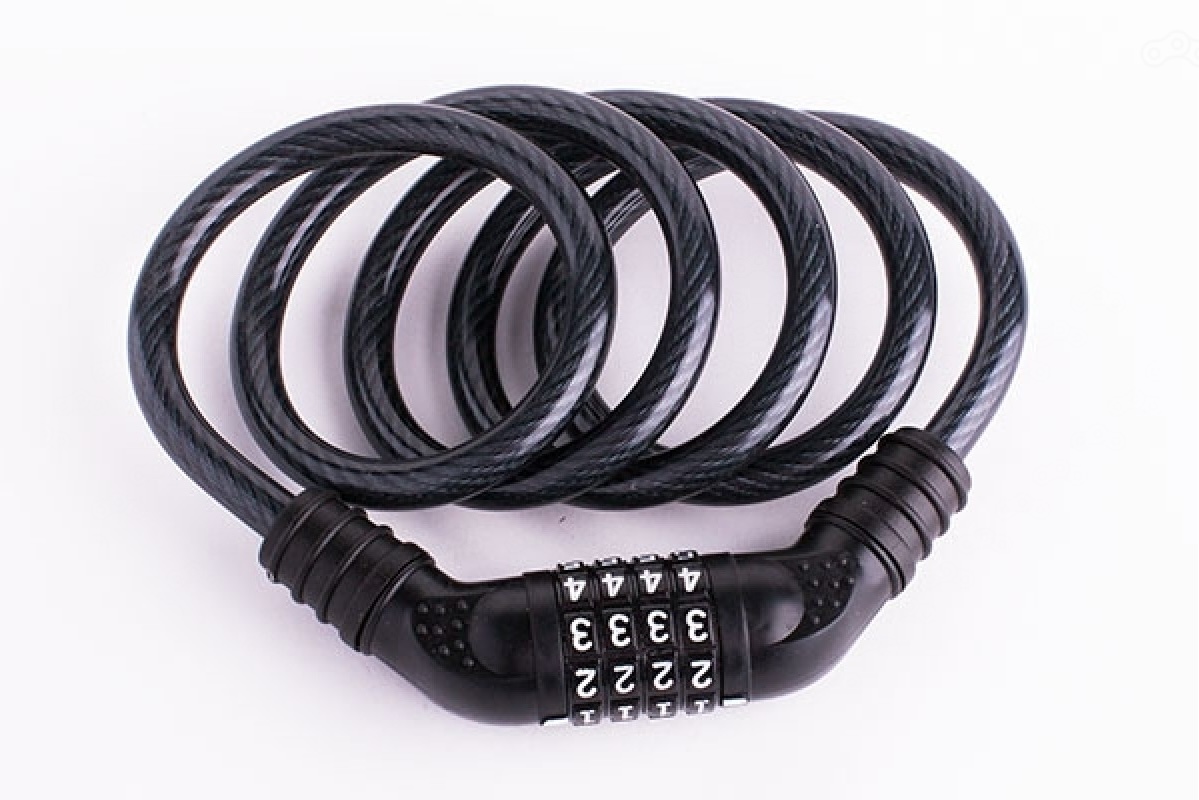
Well, if your beloved machine isn’t really that beloved. Or if you’re sure it has no value, you can use this option. No, I’m not against cables, but for a reasonable price I still haven’t seen one that even looks sufficiently massive. Besides, any cable is usually a weave of strands. And as in the old wisdom about a broom, nothing stops you from biting them off little by little, one or two at a time. As for cables with combination locks, don’t leave them for more than a couple of minutes at all. At one point I personally cracked the combination on such a cable by dumb brute force in 7 minutes. Not because I’m a thief, but because a friend had an old bike at his dacha with a cable around the frame, holding nothing, and nobody knew the code.
CHAIN
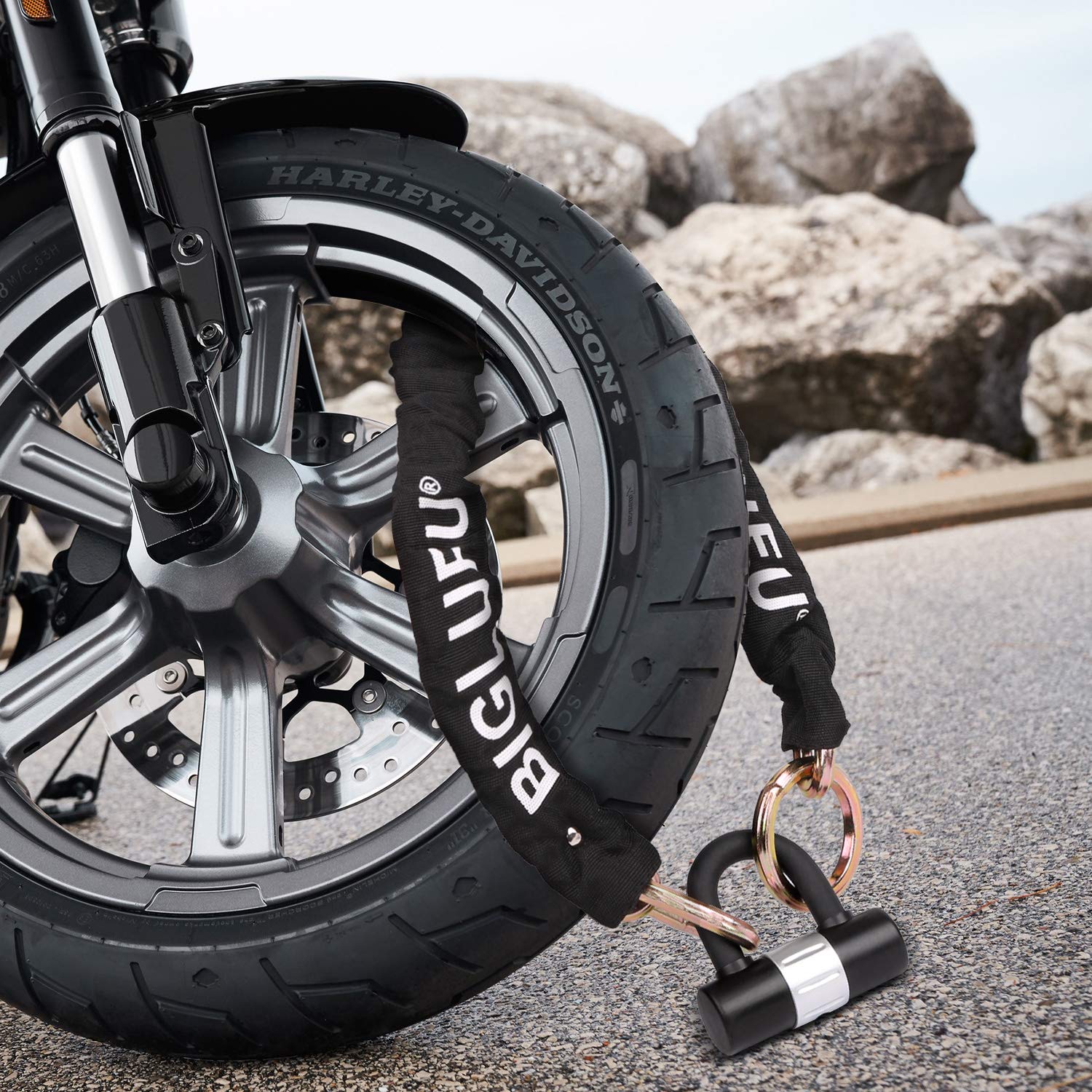
A chain is the main protection against “opportunity” theft. If your bike isn’t secured with anything, loading it into a van that pulls up is a matter of minutes. And no fancy alarm will help you, just a simple jammer on the right frequency and all the electronics won’t be able to report anything. And then, off to be dismantled. But let’s not scare ourselves too early; many models have their own specifics.
Recommendations for chains?
Read reviews, look for options, compare them. This post is an overview, so don’t expect me to go into extreme detail. You can also check out a video (which of course advertises its own chain, but still) showing what one person with a good bolt cutter can do to a chain.
There’s also a U-lock, which essentially serves the same purpose. It’s assumed to be more reliable, but obviously less convenient. On the plus side, on Indiegogo they raised more than twice the required amount for such a lock with one tiiiiny difference: when it’s cut, it releases a cloud that induces vomiting. An interesting surprise for a thief.
DISC LOCK
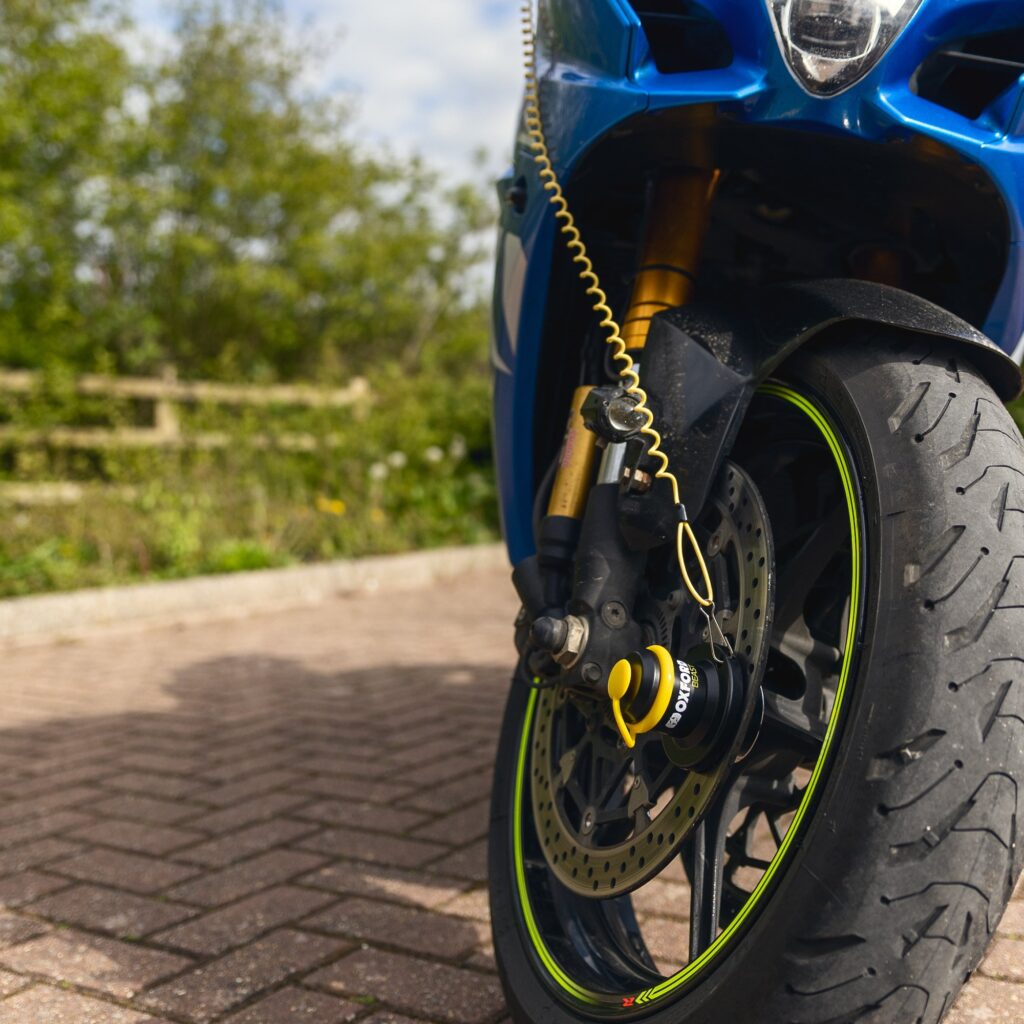
Strangely enough, a disc lock often bothers the rider more than the thief. Relying solely on a disc lock is like inviting thieves with a “skateboard.” Yes, it’s harder to ride off on such a bike, but rolling it away from a crowded place is quite possible, especially with enough nerve. Besides, the weakest point of this lock (even though it’s the most externally protected) is the pin itself. I’ve already seen reports of people starting off and the caliper cutting the lock off by itself. I don’t think you want to test that, but criminals don’t care.
So, the takeaway? A disc lock is useful, but first, you need the right pin thickness; second, you absolutely need a reminder cable/rope/spring to the handlebar so you don’t forget it; and third, I’d add a version with an acoustic siren. That’s not electronics but simple electrics, so it doesn’t care about jammers or onboard power, it’ll just scream when shaken.
Recently I’ve also seen another type of lock: the shackle doesn’t go through the disc itself but around it, then the pin thickness is comparable to a regular padlock and much stronger. You just need to make sure you can actually install it on your bike.
STEERING LOCK
It’s no secret that a steering lock can be broken if someone wants to, and not with much difficulty. But that’s not a reason not to use it.
GARAGE
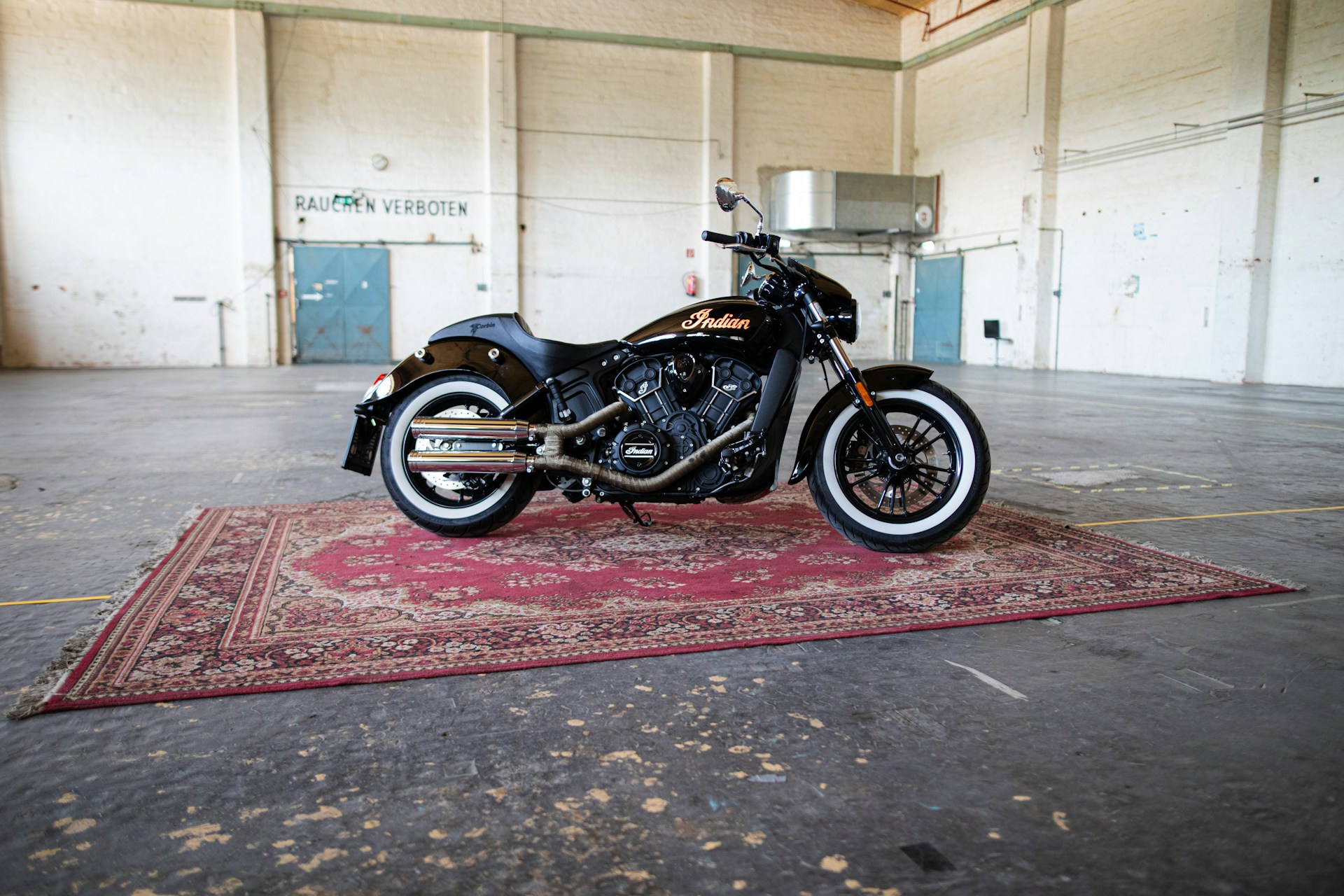
A garage by itself not only doesn’t protect against theft, it can even do the opposite. Metal walls hide the motorcycle not just from prying eyes, but also from thieves, giving them plenty of time for any actions. And noise in a garage is unlikely to attract attention. So a garage becomes a good protective measure only in combination with the other two types (electronics and humans).
For those still skeptical of this text, here’s a question: your garage is in a cooperative, the common entrance is locked, your “metal tent” is closed with two locks… but where are the walls facing? Could it be easier to just break into the box from behind? And how often do you chain your motorcycle in the garage, use an alarm, or a disc lock? Or are two simple locks on the gate all you have?
COVER
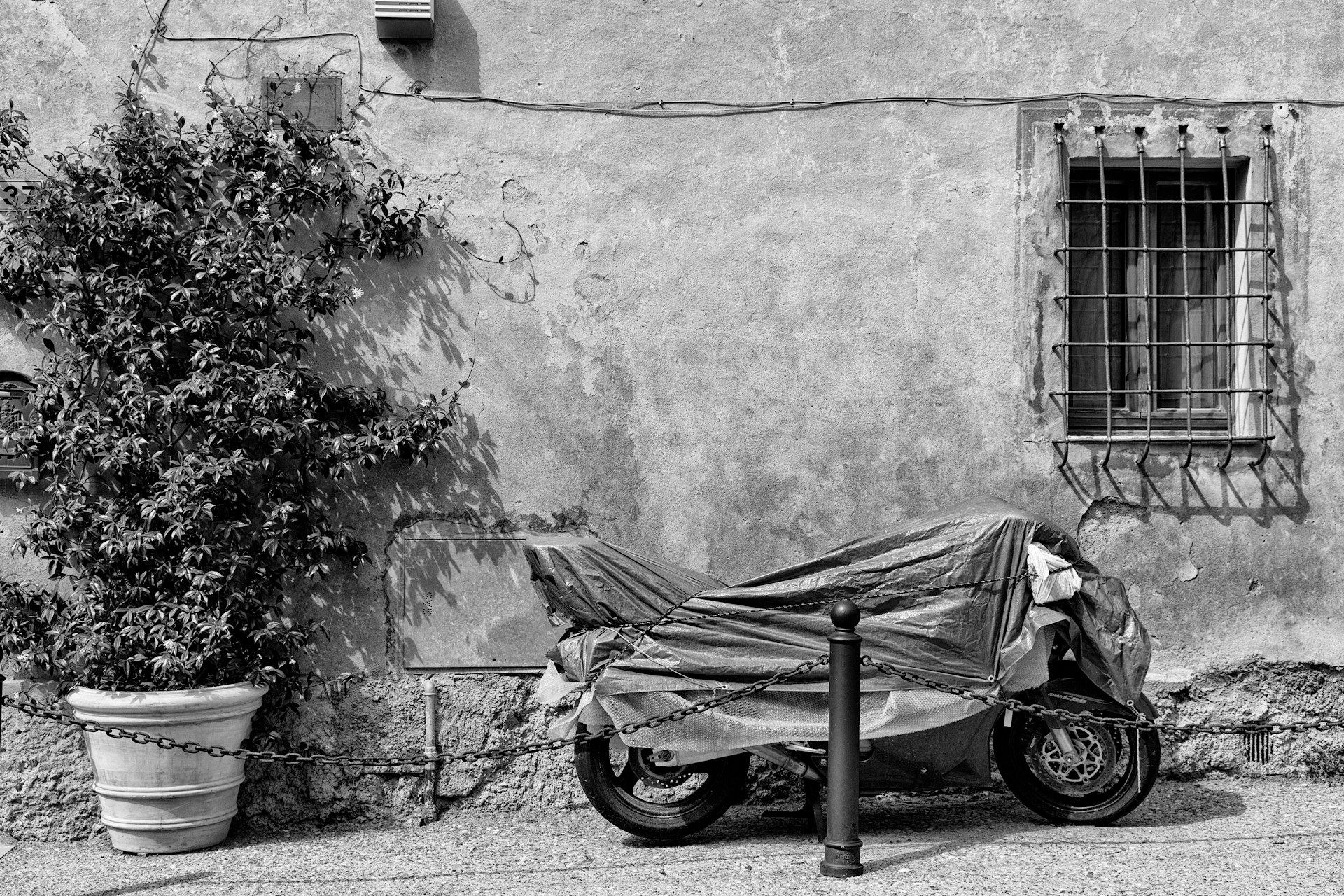
Paradoxical as it may be, a cover is also a protective measure. A cover makes it harder to determine:
- the make and model of the motorcycle (and thus how desirable or unique it is);
- its age and condition (i.e., at least an approximate price);
- the presence and extent of protective measures (how hard it is to steal);
- the presence or absence of unique features (like airbrushing or custom mods, i.e., recognizability when selling).
At the very least, this can slow a thief down or force them to look for easier prey. It also helps against school vandals and people who just like to sit on someone else’s bike.
SPECIAL MEANS
I’m more than sure I haven’t covered all protective measures. For example, relatively recently I saw a review on BikePost of a hemisphere that screws into the asphalt, to which the motorcycle is then chained by the front wheel. I can’t immediately assess the usefulness of this design, but it does exist.
ELECTRONICS
The tasks and capabilities of electronics are quite broad. With various electrically powered devices, we can potentially scare off, shock, slow down, record, or even stop a potential thief (well, that’s if you, for example, run a live phase to the garage gate… just kidding).
ALARM
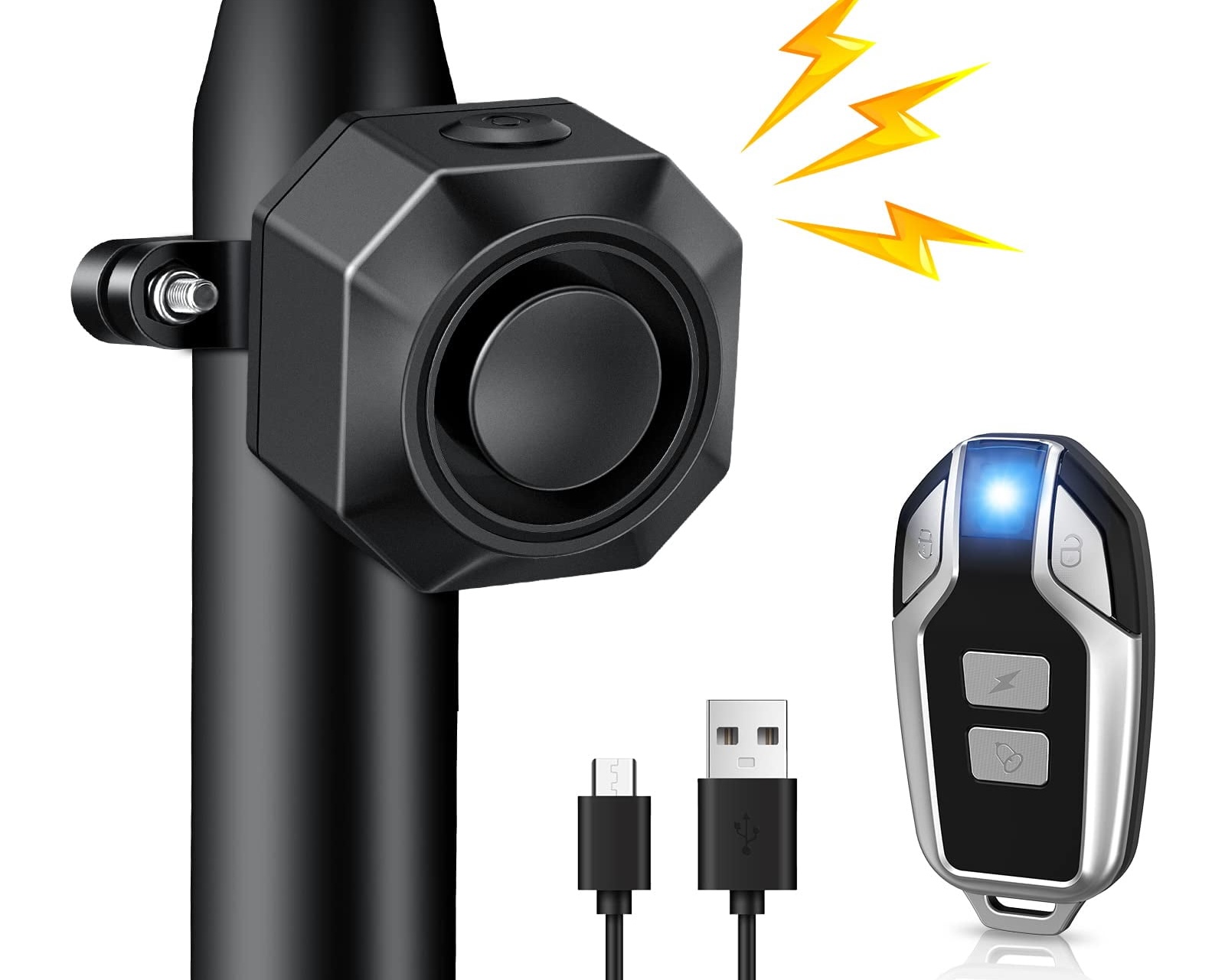
Electronic protection of any vehicle starts with an alarm. The set of features depends on the owner’s budget and level of trust in the alarm system. For example, some people aren’t ready to use a tag because the alarm might lose it, meaning the engine could be shut off, say, in a turn. As if nothing else could ever break… but you get the idea.
There’s one problem with alarms: the more famous the brand and the more expensive the module, the cooler it is, but also the more well-known it is, meaning thieves will look for countermeasures. If you manage to surprise the opponent, the thief will most likely abandon the risk. Recently, for instance, I came across someone online who implemented basic alarm functionality on… Arduino (small, weak boards like mini-computers you can program).
I’ll tell you about my own ordeal of choosing an alarm later :)
IMMOBILIZER
Some have it stock, some as part of the alarm, some don’t have it at all. I also know that an immobilizer with a tag or tied to a specific sequence of actions (for example, clutch-brake-clutch) can be bought from a certain company and built into the wiring. You won’t find it right away, in standby it consumes nothing (or almost nothing), and you simply won’t be able to start the bike. If there’s interest, I’ll drop a link in the comments, to avoid advertising. I’m sure that company isn’t the only one making such things.
GPS-GSM TRACKER
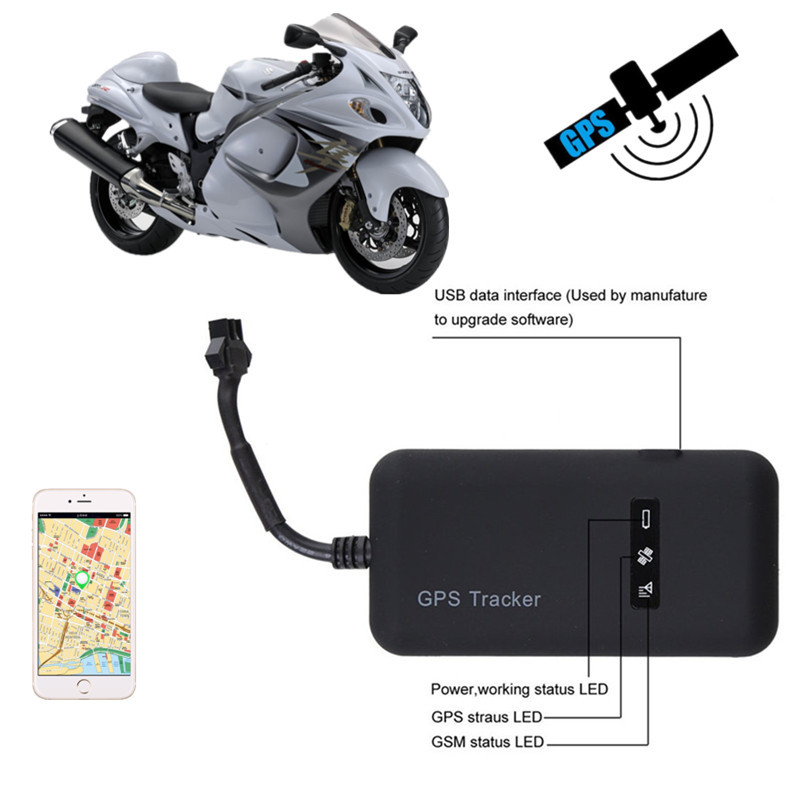
A tracker isn’t a panacea, but sometimes it helps. In my view, the ideal tracker shouldn’t have any tags at all and should operate strictly on its own schedule and via SMS. It’s something the thief shouldn’t even suspect exists, while it quietly leads you to your motorcycle. Autonomous power, charging from the onboard system, exclude it. Better to change batteries once a year than let thieves know you have one. Of course, if it’s an organized group with a “cooling-off” location where the bike can sit for months under GPS and GSM jamming, there’s nothing you can do, but IMHO it’s a useful thing.
HUMAN
It’s commonly believed that a guard in garages or parking lots is an uninitiative creature who can sleep through anything. Well, some of them really are like that, but many are forced to work there because they can’t get another job; their pay leaves much to be desired, and their attitude toward clients is poor. However, strangely enough, these same people can be quite kind and sociable if you show that you’re a friend. How hard is it to treat someone to candy, tea, crosswords, or a bottle, finally; have a heart-to-heart talk once or twice; leave a contact number and hint at a reward if they promptly report anything strange with your box? Maintaining relationships with those who keep an eye on your bike (watching doesn’t mean being responsible) is important, even if you don’t like them.
PASSERBY
This is more about temporary parking. Choose places with shop windows and bored salespeople. People love to stare at motorcycles and will at least get concerned when instead of you (a person in a helmet and gear), some random guy approaches the bike and starts fiddling with it. Ideally, you’d leave such a person your number and ask them to report… but we don’t live in an ideal world.