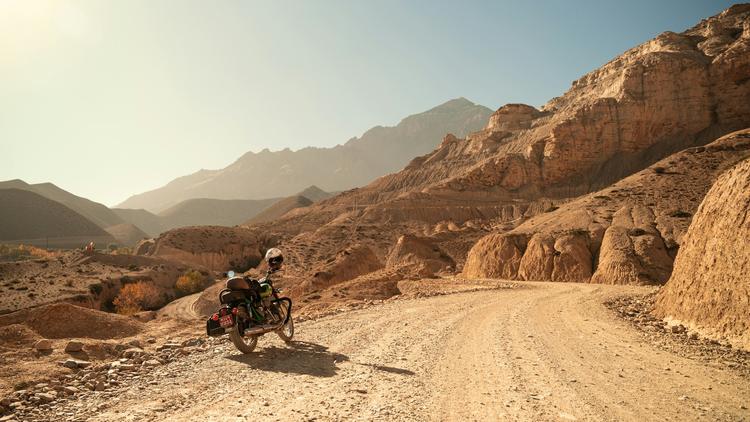
If you prepare for a long-distance motorcycle journey facing several days or even weeks on the road, whether on highways or off the beaten path, you’ll need to expand your basic tool kit so you can service and, if necessary, repair your motorcycle on your own.
Prevention Above All
A good way to determine the essential set of tools you’ll need is to perform the first major service on your motorcycle yourself. This usually includes changing the oil and filter, replacing the air filter and spark plugs, adjusting the chain, checking the brakes, and other standard procedures. As you work, make a list of all the tools and consumables you use.
This brings two key benefits. First, you’ll get a clear picture of which tools are truly necessary for proper maintenance of your bike. Second, the motorcycle will be brought into perfect working condition. And, frankly, that’s the best way to avoid unpleasant surprises on the road, prepare everything in advance. After all, an ounce of prevention is worth a hundred pounds of cure.
Compact, Combine, Optimize
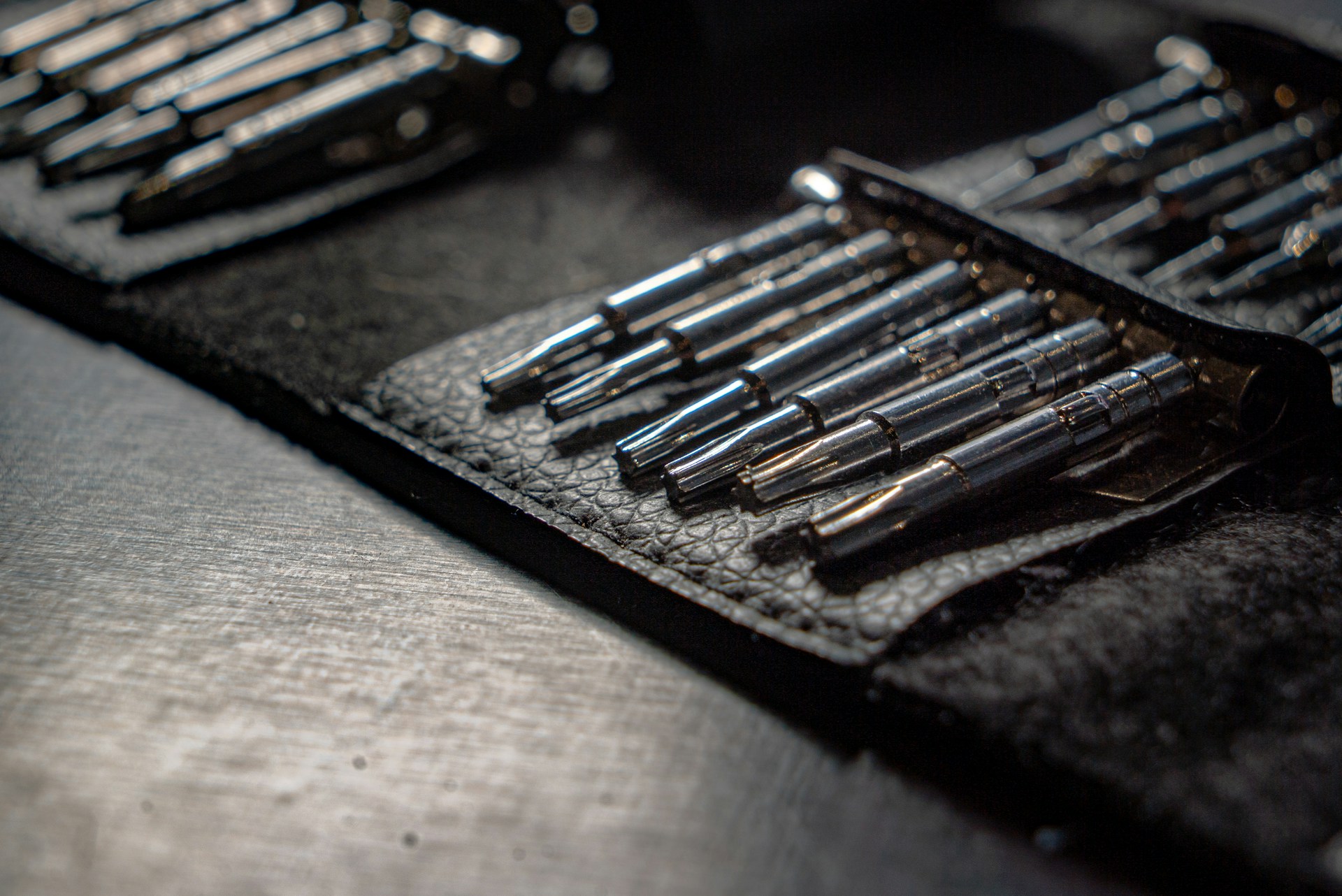
Naturally, no one wants to haul around a pannier full of “everything just in case”, so it’s important to realistically assess what can be left out and pack the rest as compactly as possible.
For example, instead of a full set of open-end wrenches “one size per wrench”, it makes more sense to take a few combination wrenches. Likewise, there’s no point in carrying a complete set of hex keys and Torx bits if your motorcycle only requires a few specific sizes. Instead of a standard 400 ml can of chain lube, you can take a travel-size mini spray or a small 30 ml bottle. The principle is simple: minimize weight and volume while maximizing functionality.
Once the basic kit for routine maintenance is ready, it’s time to prepare for everything that could go wrong. And something inevitably will, that’s the nature of any journey.
You can’t predict everything, but there are typical situations worth preparing for. It’s easiest to divide them into categories.
Wheels and Tires
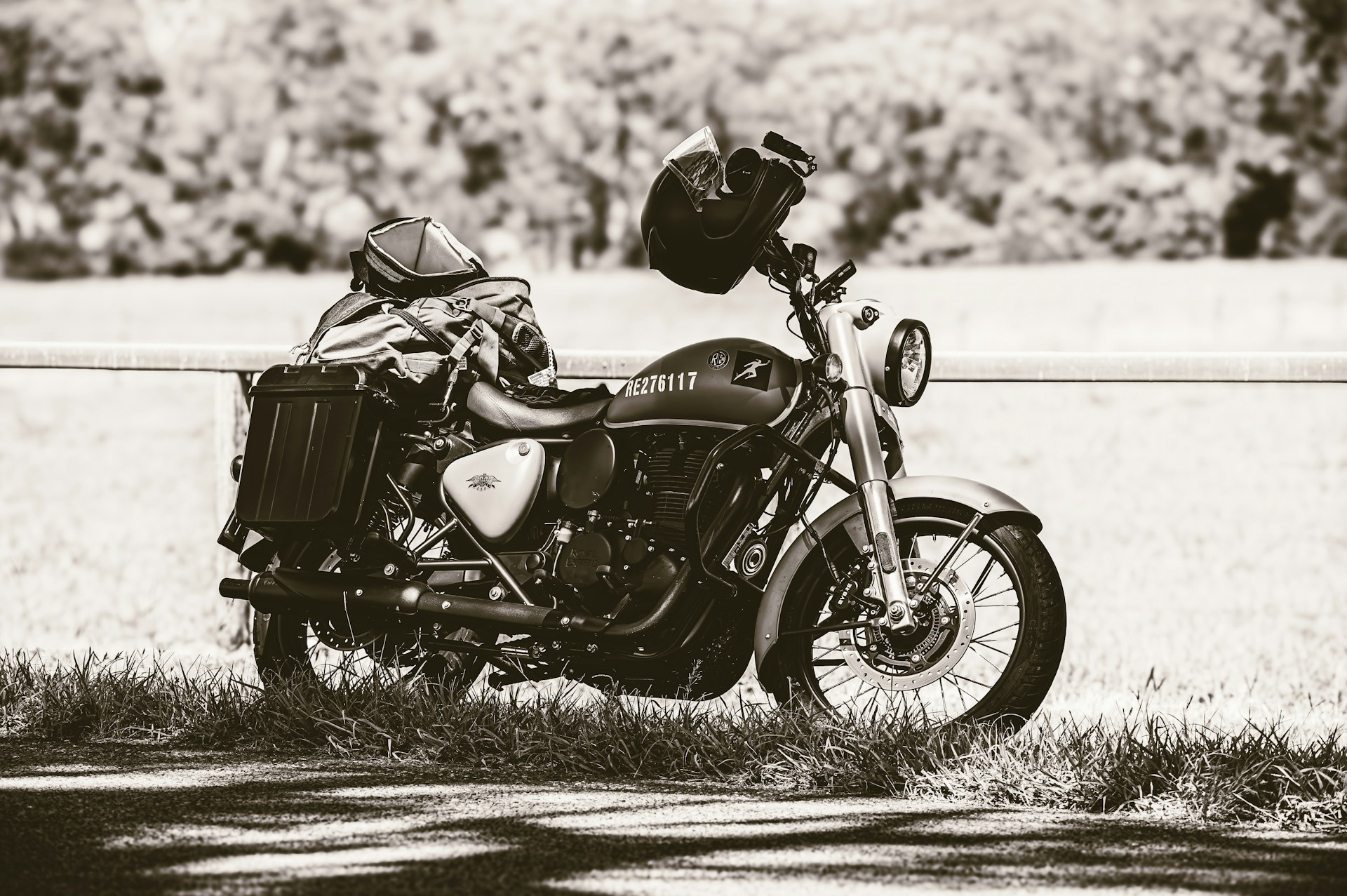
No matter what wheels or tires your motorcycle uses, you should be able to fix a puncture and, if necessary, remove a wheel. Experienced travelers usually carry a compact tubeless tire repair kit, typically including an awl and reamer to prepare the hole, plus rubber plugs. For tube-type tires, a different repair kit is needed: patches, activator glue, and a small piece of sandpaper to roughen the surface. Most standard kits already include all of this.
On short off-road trips and long journeys on hard or soft enduro bikes, it’s useful to carry a 21-inch inner tube: it can be installed in the front wheel or temporarily “stuffed” into an 18-inch rear wheel. A valve core tool and a small blade are also handy additions.
For long-distance travel, it makes sense to bring a mini compressor powered by an external or built-in battery, it’s more convenient than compressed air cartridges. If weight and reliability are critical, a manual pump is the better choice.
For wheel removal, combination tire irons with integrated wrenches are very practical, they eliminate the need to carry a ratchet, adapters, heavy sockets, and separate tire levers. To help break the tire bead from the rim, compact specialized tools work well; the most well-known example is the Motion Pro BeadPRO. If you’re traveling in a group, the same task can be accomplished using a fellow rider’s side stand.
Fuel and Oil
Carrying spare fuel or oil isn’t mandatory, but it’s extremely useful to be able to siphon fuel from another motorcycle or a car, and to have a way to quickly seal an oil leak if the crankcase is damaged.
A hose about 2 meters long with an inner diameter of 6 mm makes siphoning fuel easy. A thicker hose allows faster transfer but takes up more space.
For emergency repairs of punctured engine covers or radiators, the best solution remains two-part epoxy, so-called “cold welding” (various products like Poxipol, Loctite, Axiom, and similar). Combined with metal washers or even ordinary coins, it can reliably seal fairly large holes.
In addition, a silicone gasket sealant should be part of the mandatory minimum. One rule applies: isolate all such chemicals in separate plastic bags. Few people want their gear ruined by a leaking tube.
It’s the Small Things That Hold Everything Together
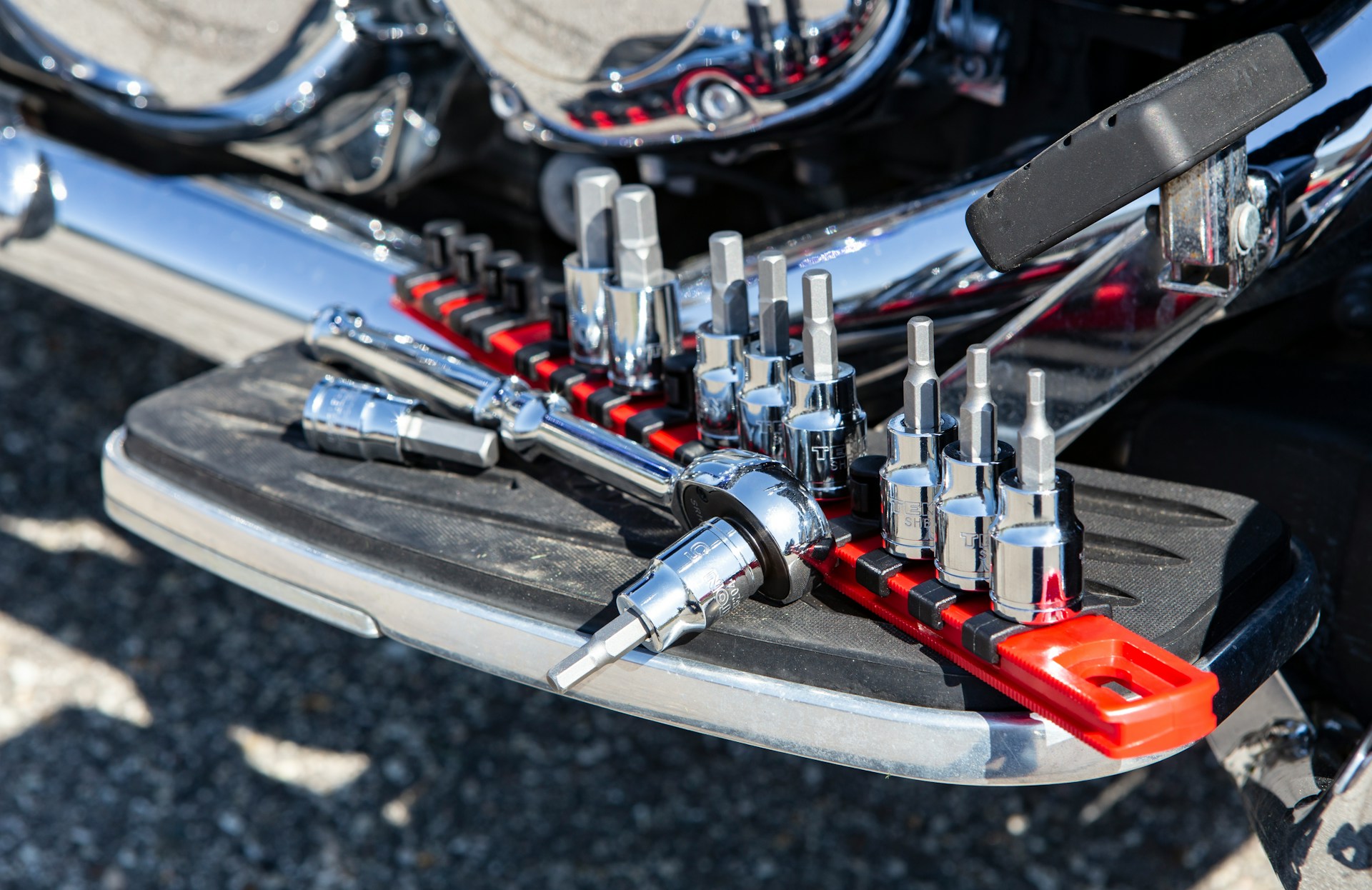
Motorcycles vibrate, motorcycles fall, and on the road there’s always a risk that something will crack, loosen, or fall off entirely. That’s why you should for sure bring reinforced duct tape, electrical tape, spare fasteners, safety wire, and, without fail, a generous supply of zip ties.
Zip ties are truly indispensable: they can secure a license plate, tighten loose plastic bodywork, or even temporarily cinch a torn tire. Metal zip ties are excellent for fixing exhaust components. A small life hack: a short cut-off piece of a plastic zip tie is perfect for mixing “cold welding” epoxy.
To save space, electrical tape can be wrapped around a wrench, for example, and a piece of reinforced tape can be stuck onto wax paper and neatly folded, this way it won’t stick to everything and will take up minimal space.
It also makes sense to carry a small electrical kit: spare fuses, a few lengths of wire, heat-shrink tubing, and connectors.
Miscellaneous but Essential
Some tools are so versatile that it’s hard to assign them to a single category.
Instead of a ratchet, you can take a T-handle wrench: it provides more leverage, has two drive ends, and doesn’t require an extension. If needed, you can even give it a light tap.
An adjustable wrench fits many different nuts and helps straighten bent levers. It can also be used to extend the leverage on hex keys or Torx bits, sometimes that solves the problem faster and more easily.
Locking pliers are a must-have. In an emergency, they can temporarily replace a lever or footpeg, and also serve as a kind of “third hand”.
A length of nylon webbing works perfectly as a tow strap. Paracord often comes in handy as well. Half a hacksaw blade won’t go unused either, sometimes something needs to be cut or trimmed right on the spot.
Storage and Organization
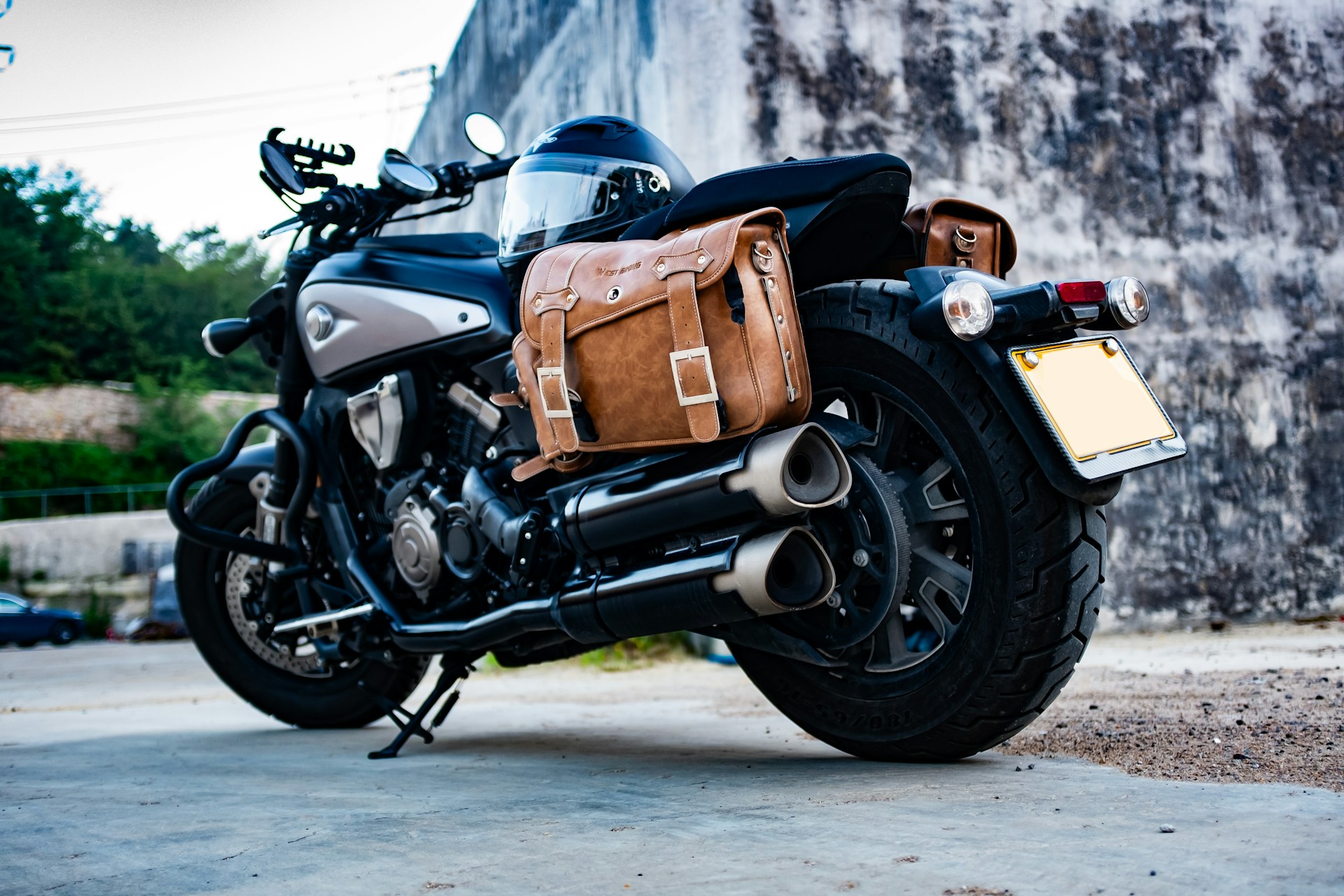
Finally, all of this needs to be packed properly. Tool bags and rolls that can be unfolded into a work surface are especially convenient, for roadside or forest repairs, this can be a real lifesaver. Some riders also add a small magnet to keep removed bolts in one place instead of losing them in the grass.
Don’t be afraid to divide tools into functional “sub-kits”. Put the tire repair kit and chain maintenance supplies into separate bags and different panniers. Tow straps, siphon hoses, and other rarely used items can be stored separately, this keeps the main kit more compact and user-friendly.
Heavier items should be placed lower and closer to the center of the motorcycle, this noticeably affects handling, especially when fully loaded.
Off-Road Additions and Useful Options
If you’re heading deep into the wilderness, add spare clutch and gear shift levers, spare clutch and throttle cables, and a small bottle of tire bead sealant.
A first-aid kit is a mandatory minimum, but that’s a topic for a separate article. A GPS beacon or satellite communicator (for example, the Garmin inReach Mini 2, ZOLEO Satellite Communicator, or similar devices) is also a worthwhile addition to any major trip. Expensive? Yes, and it may require a subscription. But if something happens far from civilization, you’ll be grateful you invested in that insurance.
And Finally, the Most Important Thing
There’s one more “tool” you can’t buy: the right mindset.
Be ready to improvise and look for unconventional solutions. Repairs won’t always be quick, easy, or neat, but with this kit and the right approach, you’re very unlikely to be left stranded by the roadside.