
You planned to get home before dark. But first, you had to fix a flat tire, and then you took a wrong turn. What should you do? If you have no GPS, cell service, internet, or compass, look up at the sky. All you need to do is learn to recognize two constellations. In the Northern Hemisphere, look for the North Star; in the Southern Hemisphere, look for the Southern Cross. Using them, you can determine north or south and orient yourself in the terrain.

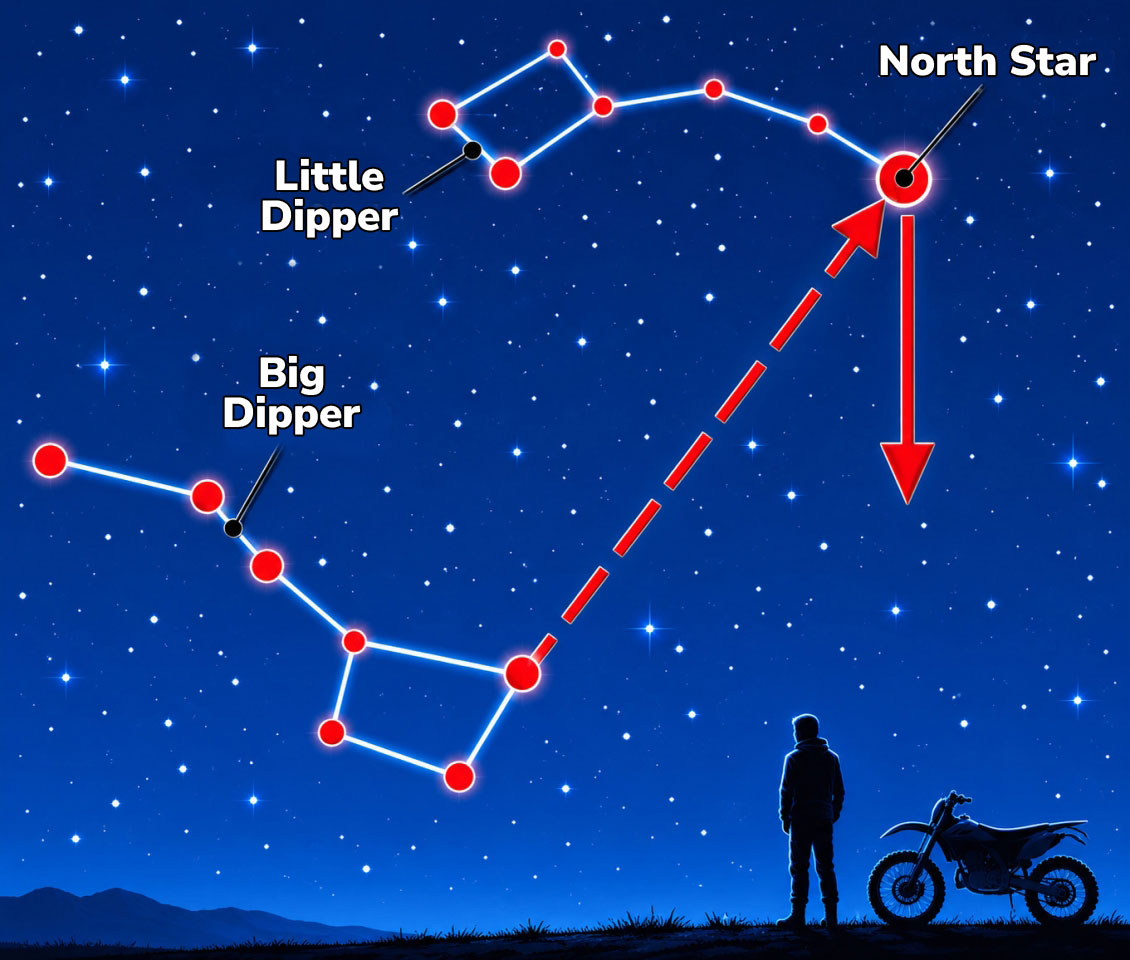
To find the North Star, locate Ursa Major (the Big Dipper). Imagine drawing a line through the two outermost stars at the edge of the Dipper’s bowl, then extend it upward by about five times the distance between those two stars. The line will lead you to the North Star, which marks the tip of the tail of Ursa Minor (the Little Dipper).
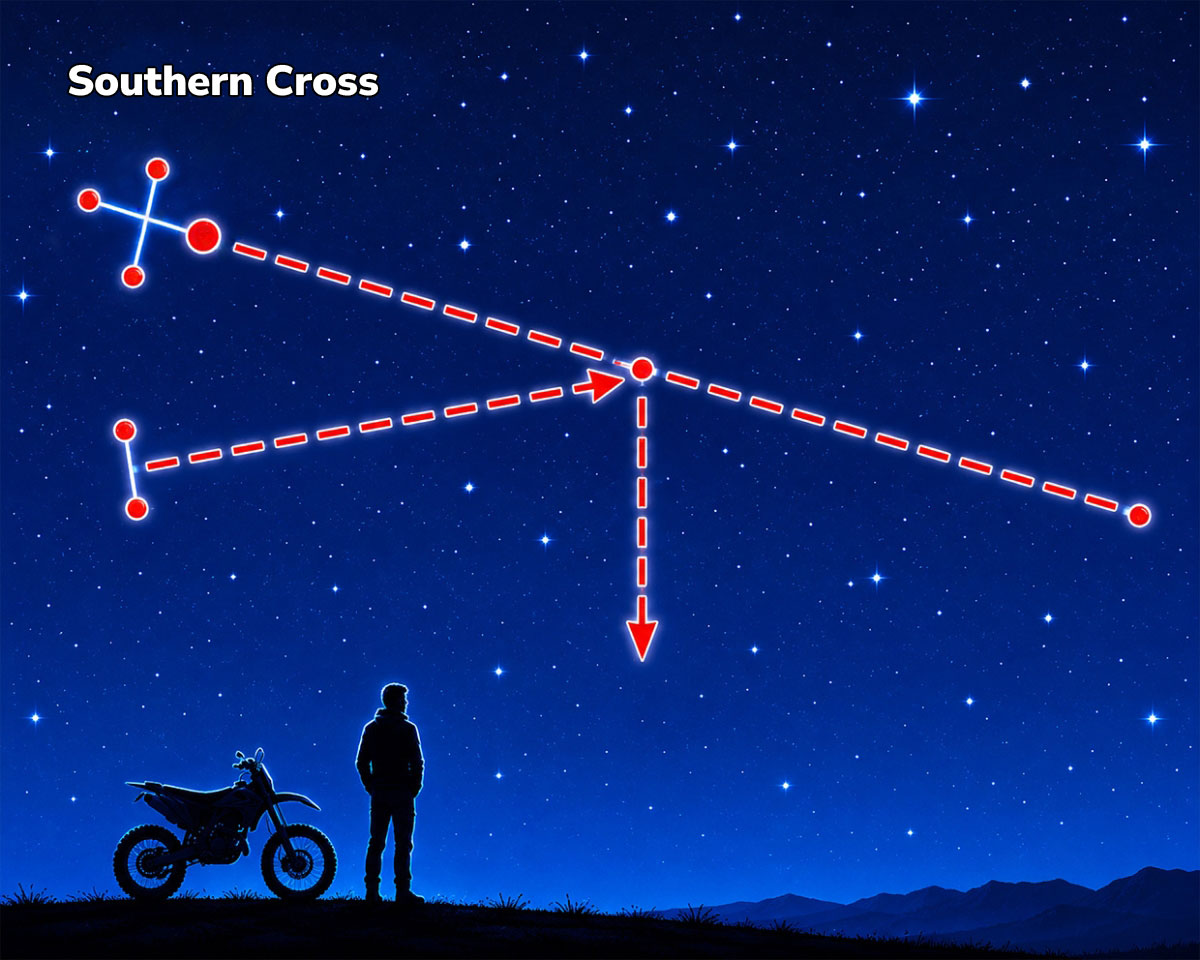
In the Southern Hemisphere, find the Southern Cross and extend a line downward along its long axis. Then locate the two bright pointer stars nearby and imagine drawing a line perpendicular to the line connecting them. The point where this perpendicular intersects the extended line from the Southern Cross indicates the direction of south.
If the sky is overcast and you cannot see the stars, wait for the moon to rise. Remember that the moon generally rises in the east and sets in the west, which can help you determine the cardinal directions. If the cloud cover is so dense that it obscures both the stars and the moon, it is best to stop, make camp for the night, and continue your journey in the morning.
Navigation Without a Compass
Anyone who enjoys off-road driving should carry a compass. But we all know we should save money, eat well, and exercise—and yet we rarely do everything we should. It is remarkable how often people forget that the sun rises in the east and sets in the west. If there is enough light to see the road, there is enough light to help you find your way. But there is another reliable method: using the sun and an analog watch.
In the Northern Temperate Zone
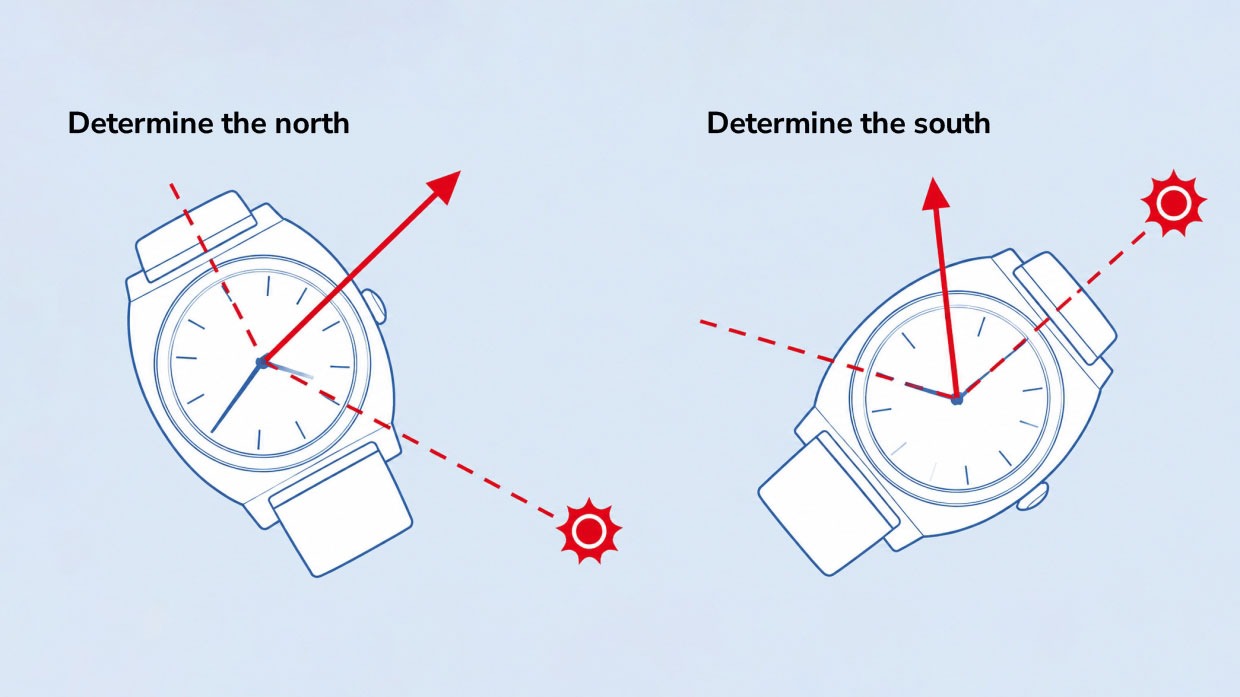
Point the hour hand of your wristwatch toward the sun. The line that bisects the angle between the hour hand and the 12 o’clock mark will indicate south (and the opposite direction will be north). If daylight saving time is in effect in your region, bisect the angle between the hour hand and the 1 o’clock mark instead.
In the Southern Temperate Zone
The procedure is reversed: point the 12 o’clock mark toward the sun. The line halfway between the 12 o’clock mark and the hour hand will indicate north. If daylight saving time is in effect, bisect the angle between the sun and the 1 o’clock mark instead.
Have a digital watch? No problem. Simply draw a round clock face with hands on the ground, and the method will still work.