Today we’ll look at one of the most common questions among those interested in off-road motorcycles. At first glance, motocross and enduro bikes look almost the same — similar frames, tires, and riding positions. But in reality, they are two completely different machines, built for very different purposes.
Motocross and Enduro — Not the Same Thing
Many people ask:
“If I buy a motocross bike, can I occasionally ride it in the woods?”
or the opposite:
“If I have an enduro bike, can I ride it on a motocross track?”
Some even think that if you just put a headlight on a motocross bike, it becomes an enduro. Unfortunately, it doesn’t work that way. Despite looking alike, these are two entirely different motorcycles, each designed for its own job.
The Engine and Its Character
Let’s compare two typical examples:
- KTM 450 SX-F — a 450 cc four-stroke motocross bike.
- KTM 250 EXC-F Six Days — a 250 cc four-stroke enduro bike.
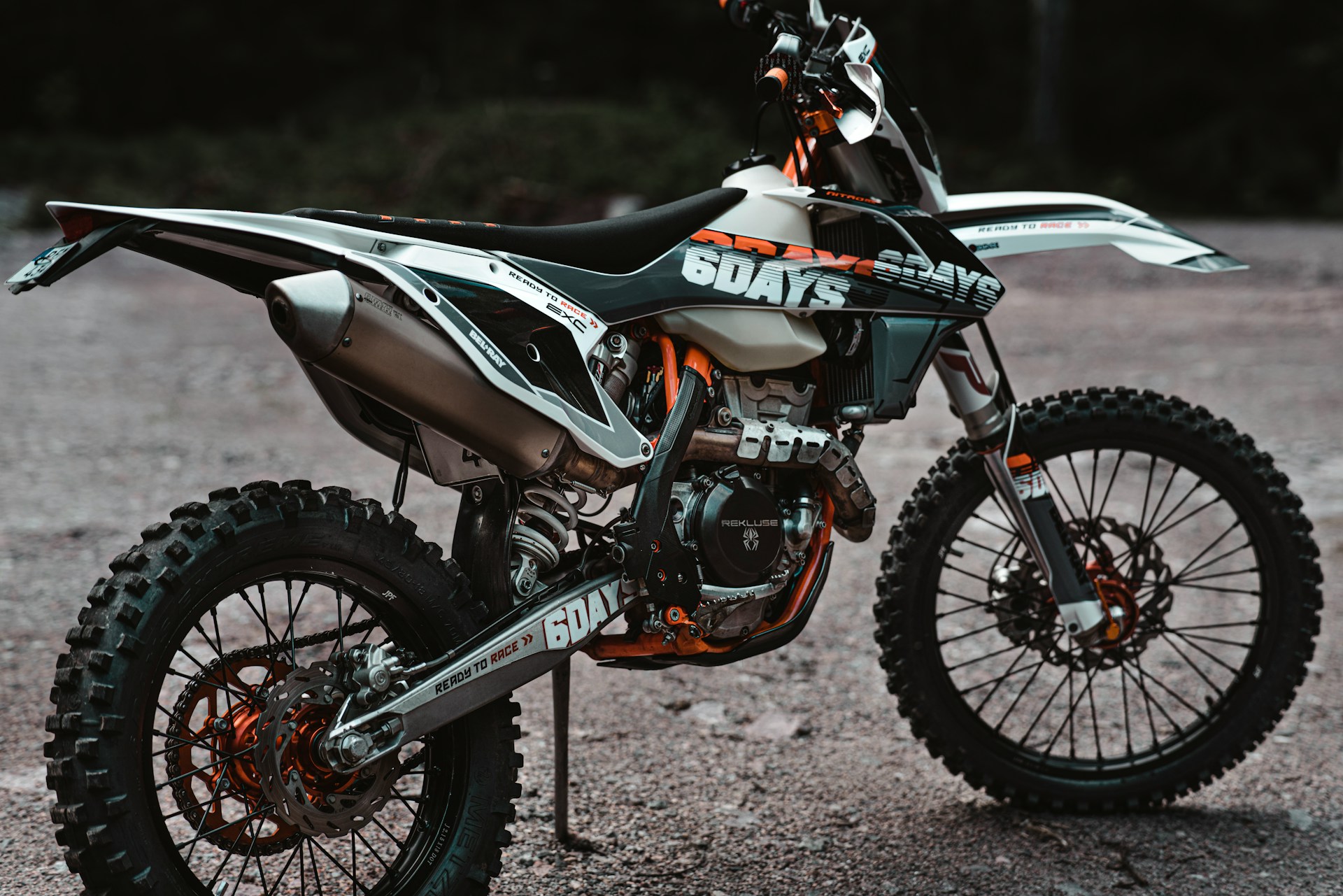
KTM 250 EXC-F Six Days
At first glance their engines seem similar, but if you take them apart, you’ll find that they share almost no components. Everything is different — the crankshaft, camshafts, piston group, gearbox ratios.
The
motocross engine is built for
high-rev performance and peak power. It’s meant to be revved hard and kept near the redline. On a motocross track there are no obstacles that require slow crawling — just jumps, whoops, and acceleration zones.
The
enduro engine, on the other hand, focuses on
low-end torque. In enduro you have to climb over rocks, logs, mud, and move slowly at times. That’s why it needs grunt, not top-end horsepower.
So in the enduro motor:
- the crankshaft is heavier,
- cam profiles are different,
- intake and exhaust are tuned for torque.
In short: the motocross engine is a fiery sprinter; the enduro engine is a patient workhorse.
Engine Life and Maintenance
People often assume that an enduro engine lasts much longer. That’s partly true — it operates at lower rpm and has less stress — but the difference isn’t huge.
Both types require strict maintenance schedules. Mileage is measured not in kilometers but in
engine hours. If the manual says “change oil every 30 hours,” you really must do it.
Neglecting service quickly leads to problems. The myth that “KTM engines don’t last” usually comes from riders who skip maintenance.
Suspension — The Key Difference
Suspension is the heart of any off-road motorcycle, and here the differences are dramatic.
For years,
motocross bikes used an
open-cartridge fork — simple and easy to service. Modern KTM motocross models now use an
air fork (AER), where air replaces the metal spring. It saves weight, but causes issues in cold weather: air pressure changes with temperature, so the fork stiffness varies as you ride.
That’s why riders who train in winter often replace the air cartridge with a classic spring-hydraulic setup.
Enduro bikes, on the other hand, use a
closed-cartridge fork. Inside it is a sealed hydraulic unit, and the oil in the fork legs serves only for lubrication. It’s more complex and expensive but more reliable for long rides in mud and rough terrain.
Rear Suspension and Progression
At the rear, motocross bikes use the
linkage system — a set of rods and levers that create a progressive suspension curve.
Enduro bikes use
PDS (Progressive Damping System) — no linkage, all progression is built into the shock absorber.
Why?
- Linkage systems provide a smoother, more linear response — great for tracks with jumps.
- But linkage reduces ground clearance.
In enduro,
ground clearance is vital. The bike must slide over logs and rocks without catching the suspension. That’s why the PDS design is used — more expensive and harder to service, but offering higher clearance.
Why a Motocross Bike Isn’t Good for the Woods
Motocross gearboxes have close ratios and short gearing for quick bursts of speed. The suspension is stiff for hard landings and jump impacts.
In the forest, that stiffness becomes torture — the bike bucks and kicks over every root.
Why an Enduro Bike Doesn’t Belong on a Motocross Track
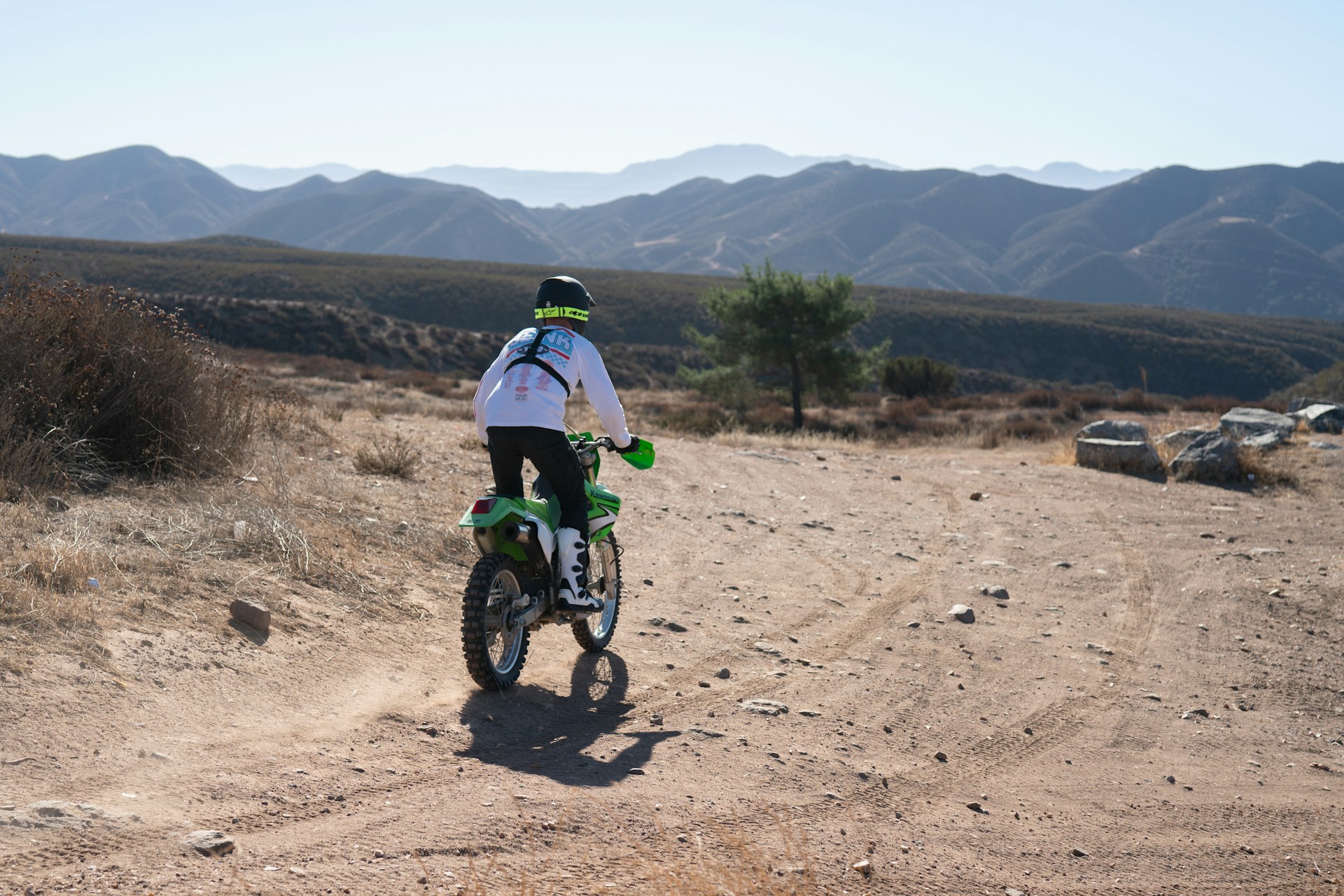
An enduro bike feels soft and plush. Its suspension compresses deeply, absorbing bumps instead of launching off them. On big jumps it bottoms out easily. Its gearbox is wider, and the motor doesn’t like constant high-rpm riding.
You can ride a few laps, but you won’t match motocross pace.
Lights, Electrics, and Road Legality
Enduro bikes come with a headlight, turn signals, mirrors, and a number-plate holder — not because they’re meant for street riding, but because
they are homologated for limited road use.
Some enduro races include sections on public roads, so manufacturers need street certification. To meet regulations, KTM includes:
- a headlight,
- taillight and plate light,
- turn signals,
- mirrors.
These parts are often packed in a box and never installed — they’re flimsy and intended only for passing inspection.
Motocross bikes, in contrast,
have no VIN registration or road approval. They can’t legally be ridden on public roads. Riders transport them to the track by trailer or van.
Conclusion
Motocross is all about speed, jumps, and explosive bursts on prepared tracks.
Enduro is about endurance, torque, and control over unpredictable terrain.
Yes, they may look similar, but underneath the plastics they are completely different machines — different gearing, suspension, and engine philosophy.
Putting a headlight on a motocross bike won’t turn it into an enduro.
Each is built for its own battlefield.